About the National Plant Biosecurity Diagnostic Network

Miridae and Lygaeoidea Diagnostic Workshop Report
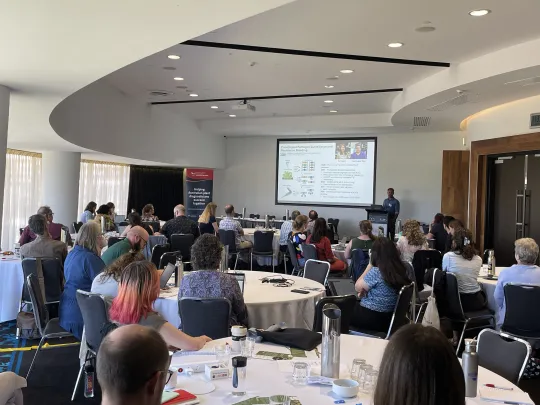
Annual Diagnostics Workshop (ADW) 2024 | Workshop presentations

The National Plant Biosecurity Diagnostic Network (NPBDN) is the nationally integrated network for plant diagnosticians in Australia.

Members of the network support their profession by helping to contribute to a sustainable plant diagnostic system. Their activities enable the efficient and effective diagnosis of plant pests by Australian plant diagnosticians.

The network was founded in 2011. The network was formally established by a wide range of stakeholders involved in managing Australia’s plant biosecurity system. Plant diagnosticians involved with this network are located in every state and territory. Diagnostic services are provided from cities and regional centres in most of Australia’s major agricultural production areas.


Our initiatives

Initiative

Collections are one part of the national plant biosecurity diagnostic system along with human capability, information, interactions and linkages.
Initiative

Improve the national plant biosecurity diagnostic capability and capacity by improving the capability of diagnosticians.
Initiative

Proficiency testing provides valuable information on the performance of diagnostic laboratories.
Initiative

The Modern Diagnostics initiative was implemented to strengthen Australia’s tropical biosecurity diagnostic capability through increasing connectivity between tropical biosecurity diagnosticians, enhancing diagnostic skills and tools across northern Australia, and improving tropical biosecurity infrastructure.

Subcommittee on Plant Health Diagnostics

Stanley Bellgard

Chair
Northern Territory - voting

Stanley Bellgard

Toni Chapman

Deputy Chair 
New South Wales - voting

Toni Chapman

Dominie Wright

Proficiency Testing Coordinator
Western Australia - voting

Dominie Wright

Fiona Constable

Victoria - voting

Fiona Constable

Alison Dann

Tasmania - voting

Alison Dann

Juliane Henderson

Queensland - voting

Juliane Henderson

Cathryn Todd

South Australia - voting

Cathryn Todd

Annelies McGaw

Commonwealth - voting

Sonu Yadav

Northern Territory - voting

Sonu Yadav

Peter Cross

Tasmania - non-voting

Peter Cross

Peter Crisp

South Australia - non-voting

Chantelle Girgan

Victoria - non-voting

Chantelle Girgan

Ossie Wildman

NSW – non-voting

Ossie Wildman

Vera Andjic

Commonwealth – non-voting

Vera Andjic

Mike Hodda

Observer – CSIRO

Mike Hodda

David Lovelock

Observer – Plant Health Australia

David Lovelock

Disna Gunawardana

Observer - Biosecurity NZ

Disna Gunawardana

Rosalie Banks

Observer - Subcommittee on National Plant Health Surveillance (SNPHS) Chair

Judy Bellati

National Protocols Coordinator - non-voting

Our network

Consider joining the network

Providing plant health diagnostic services in Australasia can be challenging, particularly given the array of host plants, shrinking resources and the heightened risk from increased trade and travel.

These challenges are more effectively dealt with when Australasian plant biosecurity diagnosticians are working cooperatively in a network. If you would like to contribute to this network, consider becoming a member.

Miridae and Lygaeoidea Diagnostic Workshop Report

Are you eligible to join?

To join the network you must be an active plant diagnostician employed within Australasia by a government agency, a research institution-based laboratory, a commercial laboratory or a museum.

The network invites all plant diagnosticians to become members, including: entomologists, general plant pathologists, virologists, phytoplasmologists, bacteriologists, molecular biologists, mycologists, nematologists, botanists and weed scientists.

Career spotlight – Alyssa Martino

Benefits to you

  • Connect with other diagnosticians for assistance and advice
  • Improve your awareness by being able to take advantage of opportunities to enhance your expertise in plant diagnostics through various professional development activities
  • Easily access and share insights on a range of tools and resources.
Annual Diagnostics Workshop (ADW) 2024 | Workshop presentations

Benefits to Australian plant diagnostics

An integrated, national network has numerous benefits, including:

  • identification and reduction of unnecessary duplication of effort through networked diagnostic capability and capacity
  • removal of impediments that currently restrict open multi-jurisdictional interactions through the development of standard operating procedures and agreements.
Arabidopsis in growth cabinet
  • identification and development of responses to emerging risks and gaps in diagnostic services across the biosecurity continuum
  • provision to deliver seamless surge capacity during outbreaks
  • increased information flow through the use of contemporary IT and secure social network services
  • promotion of delivery of education and training for plant diagnosticians.
Career spotlight – Andrew Manners

Our governance

Charter for the National Plant Biosecurity Diagnostic Network

The purpose of the National Plant Biosecurity Diagnostic Network (the Network) is to enhance the delivery of plant biosecurity diagnostic services in Australia to safeguard the economy, environment and community. The Network improves Australia’s ability to respond to plant pests through better utilising available skills and capacity, improving connections and sharing of information, and coordinating the effective development and deployment of diagnostic resources.

The Network consists of organisational, individual and coordinating members. Individual and organisational members:

  • diagnose exotic and established plant pests;
  • exchange experience and expertise through the Network; and
  • improve the capacity of the Network by developing new or improved technologies and procedures.

The National Plant Biosecurity Diagnostic Professional Development and Protocols Projects are coordinated and delivered by Plant Health Australia and are funded by the Department of Agriculture, Fisheries and Forestry. The objectives of the Projects are to enhance and strengthen Australia’s diagnostic and surveillance capacity and capability to identify priority plant pests that impact on plant industries, environment and the community.

Coordinating Network members:

  • oversee the strategic direction and development of the Network and its members;
  • manage the Network structure to optimise efficiencies and to assist members; and
  • communicate on behalf of the Network and promote the Australasian plant biosecurity diagnostic system.

See our charter