

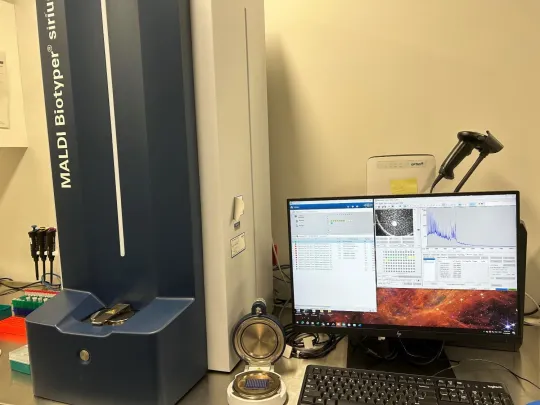
Matrix-assisted laser desorption/ionization time-of-flight mass spectrometry (MALDI-ToF MS) is a technique that records the unique proteomic fingerprint of an organism, and then identifies what species is present in the sample by comparison to a reference database (library). The use of MALDI-ToF MS in diagnostic workflows within a plant biosecurity setting enables rapid, cost-effective identification of bacteria and fungi and targeting of effort towards efficient, rapid resolution of biosecurity risk.
A national MALDI-ToF MS Steering Committee has been established to oversee a nationally coordinated approach to the development and sharing of MALDI-ToF MS diagnostic reference libraries for plant biosecurity. This steering group consists of representation from the Australian government, state & territory governments, and observers from Plant Health Australia and New Zealand Ministry for Primary Industries.
One of the initial activities to be progressed by the committee has been the development of technical standards for the generation of MALDI-ToF MS reference libraries. Standardisation of reference library development is necessary to ensure quality and downstream accuracy and reliability of the technology for new or emerging pathogens as well as for additional targets not supported by currently available libraries. These standards have been nationally endorsed through Plant Health Committee’s Subcommittee on Plant Health Diagnostics with a link to this document provided below.
The creation of a national plant biosecurity reference library, in accordance with these standards, is currently underway and includes priority plant bacterial and fungal pathogens as well as many non-pathogenic organisms from vouchered specimens and validated sources. The library will also continuously expand with data from operationally intercepted organisms.